
Introducing Fooku to Kant: From Hissing to Sleeping Together
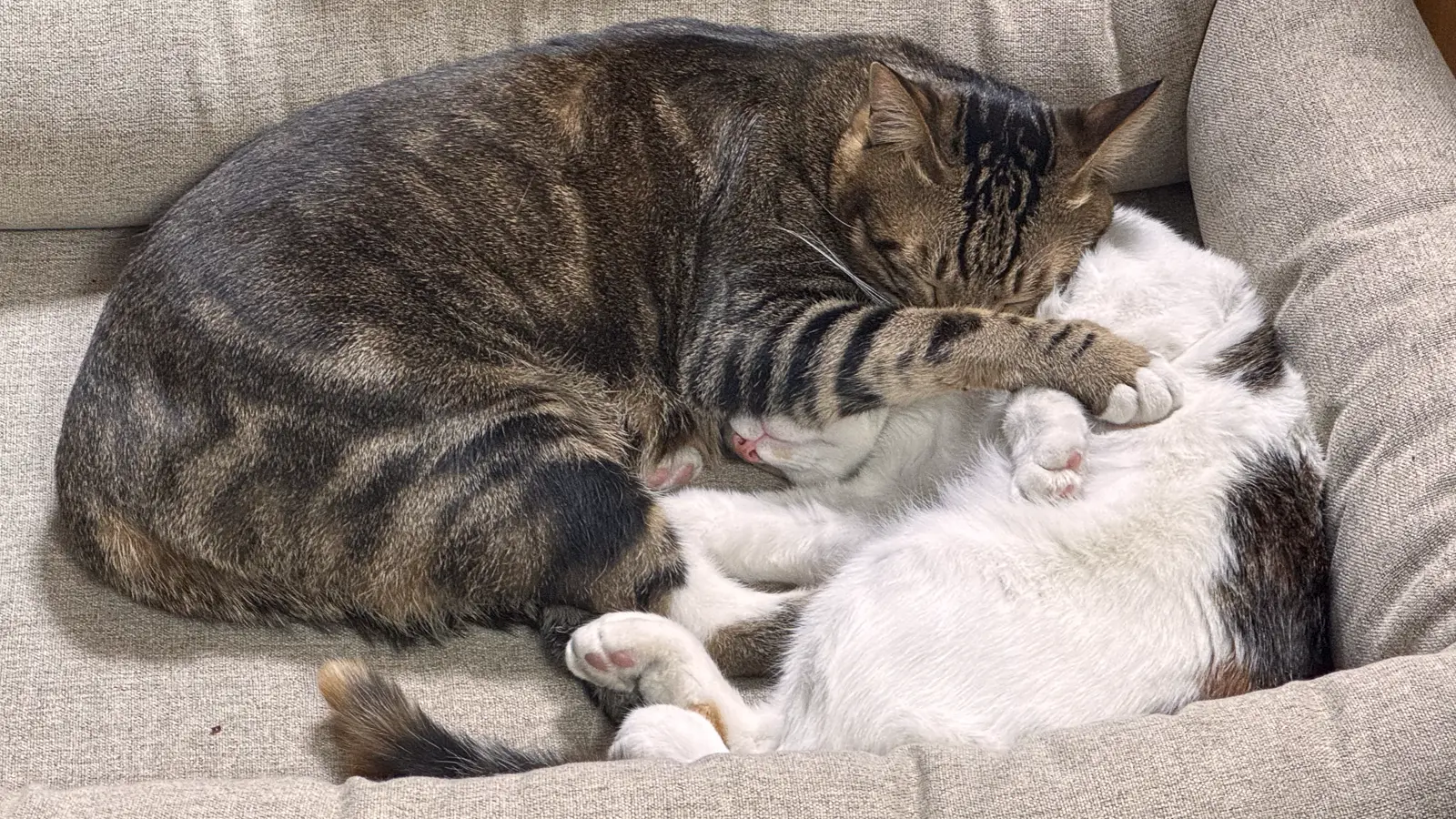
On July 1, 2025, Kant and Fooku were inside a small cardboard scratcher house together. It was narrow enough that their bodies touched. They stayed there for a while and eventually fell asleep.
Ten days earlier, I would not have expected to see that.
When Fooku first came home, Kant hissed at her. He also rejected contact from family members who were caring for her, avoided the room she was in, climbed to the top of the bookshelf in my study, and stayed there for a long time. He barely ate even food he usually liked.
Seeing this for the first time, my family and I thought Kant was experiencing intense distress. He looked unhappy to us, and my wife and I regretted how casually we had approached the introduction.
But over the next few days, small changes began to appear in Kant’s behavior.
At first he avoided Fooku. Then he began watching her from a distance. Before dawn one morning, while everyone else was asleep, he entered her room on his own. Once Fooku began moving around the house, he followed at a distance. About ten days after she arrived, the two of them slept together in the same small space.
That experience changed the way I think about introducing cats.
The Day Fooku Arrived, Kant’s Behavior Changed
Fooku came to our home on June 21, 2025, at about six weeks old.
At the time, Kant and Hodu were already living with us. Because Fooku was so young, we cleared a room for her so she would not have to suddenly face the other animals. In one corner, we set up a plastic cage with bedding, water, a litter box, and a place to hide.
At first, we kept the door closed too. Hodu was especially interested in the tiny kitten, and we worried that could frighten Fooku.
But we had not planned the introduction systematically.
When my wife brought Fooku home, Hodu and Kant saw her come out of the carrier backpack from the beginning. Both watched her with intense interest, and we did not expect much trouble.
That changed within an hour.
Kant began hissing at Fooku. When family members caring for Fooku approached him, he rejected touch and hissed at them too. My wife and I were alarmed by a reaction we had not anticipated.
Kant would not enter Fooku’s room and spent long periods on top of the bookshelf in my study.
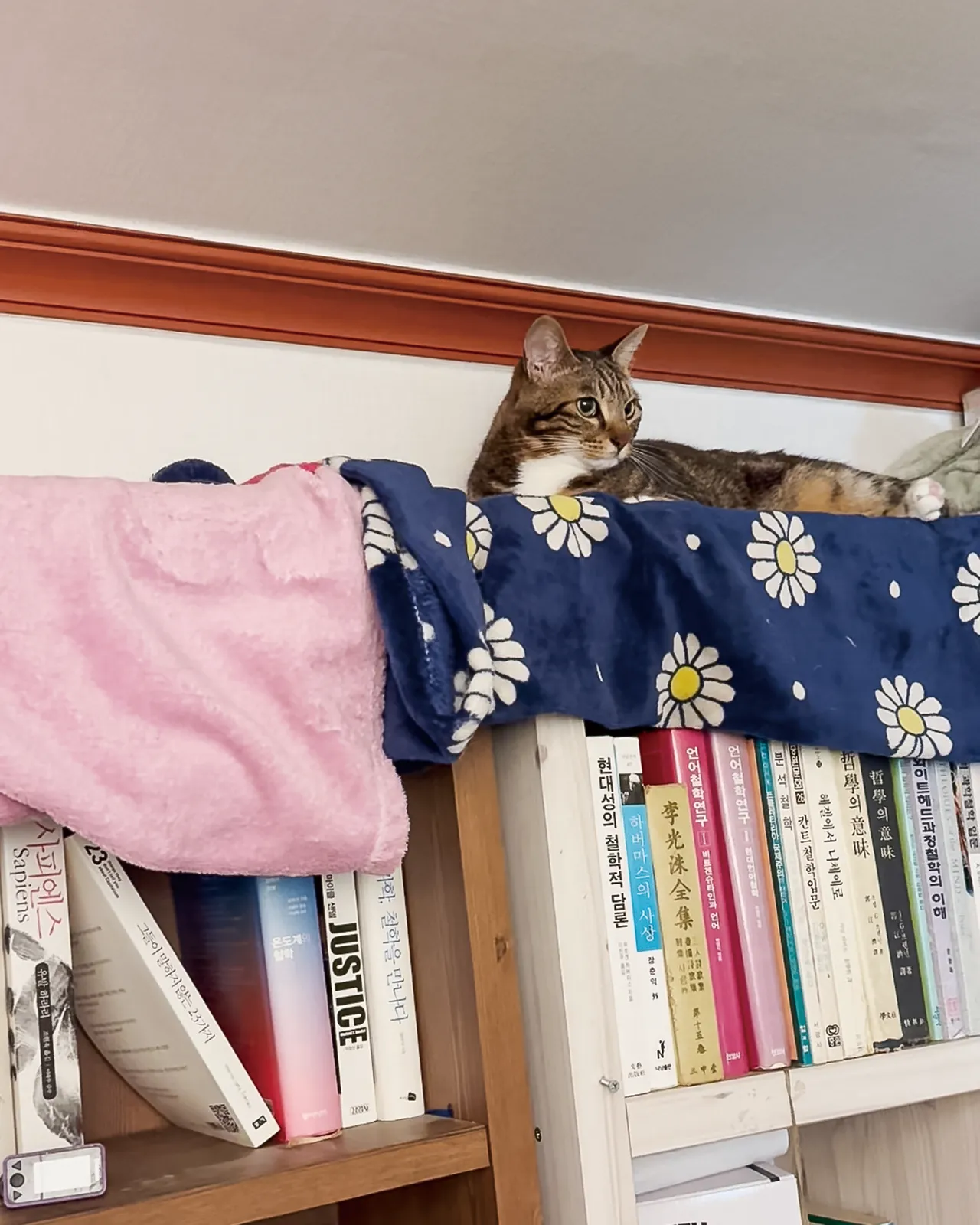
What worried us most was that he stopped eating normally. Even when offered food he liked, he ate only a little or left almost all of it. He did not respond to hunting-style play he usually enjoyed, and he spent more time lying alone.
We felt that Kant had become unhappy.
Looking back, that was our interpretation of what we were seeing. I cannot know exactly what Kant was feeling.
What I can say with confidence is that his behavior changed: hissing, avoidance, staying in a high place for long periods, reduced eating, and lower activity.
The 2024 AAFP Intercat Tension Guidelines likewise emphasize looking not only at overt behaviors such as hissing and avoidance, but also at changes in normal patterns of behavior. Introducing a new cat is one of the situations in which intercat tension can emerge.
Kant Began Watching Fooku Instead of Avoiding Her
The first three days were the hardest.
On June 22, the day after Fooku arrived, I noticed something different.
Kant still did not go into her room, but he sat outside the doorway and looked in.
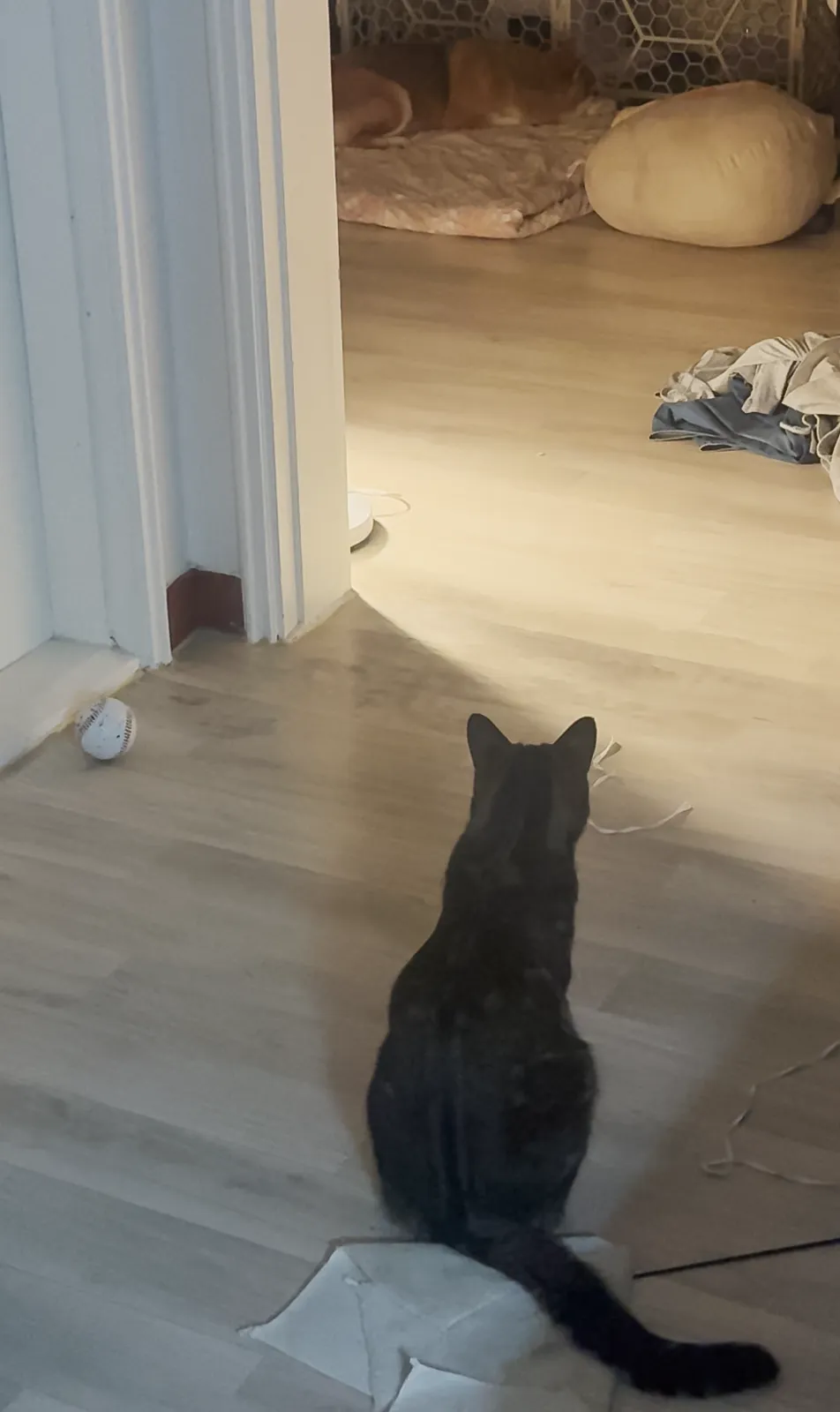
I did not know exactly what that behavior meant. What stood out was simply that Kant was looking toward a place he had been avoiding.
An even more memorable scene came before dawn the next day.
At about 3:16 a.m. on June 23, I happened to wake up and saw Kant sitting close to where Fooku was sleeping, watching her. When he noticed me, he slowly walked out.
A little later, I checked again.
At 3:53 a.m., Kant was inside the room, under a chair, watching Fooku.
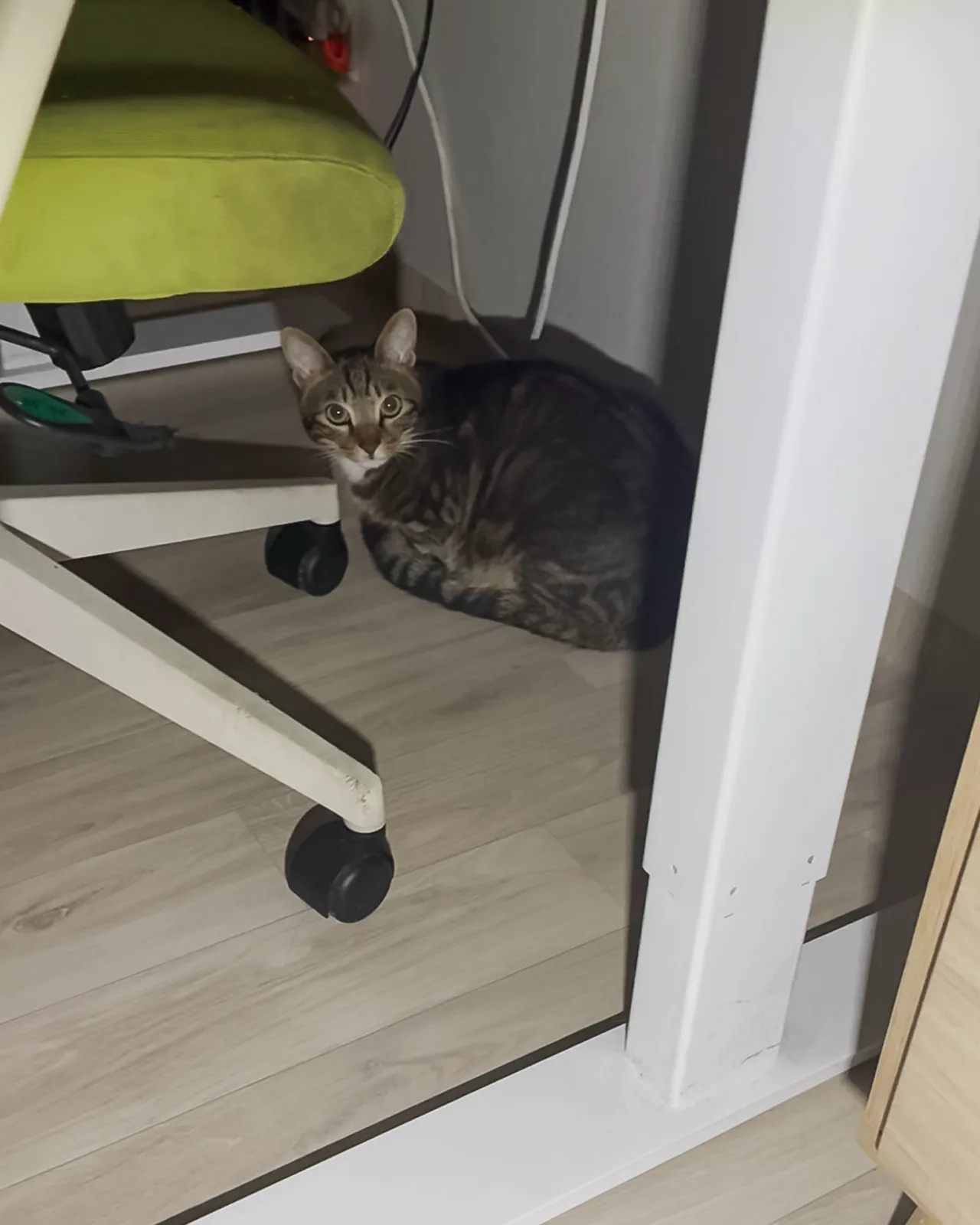
That scene stayed with me.
At the time, I took it as a hopeful change. That does not mean I knew what Kant was thinking, and I cannot say it was curiosity.
But one change was visible in his behavior.
The cat who had been avoiding Fooku’s room was entering it on his own and reducing the distance between them.
That is the part I still find important. Rather than guessing what Kant “thought,” I can look at how the actual distance between them changed.
The Distance Between Them Gradually Shrunk
On June 23, we removed the cage and let Fooku move freely around the room. From the next day, she also spent more time exploring the rest of the house.
Fooku did not appear especially fearful of Hodu or Kant. She explored and played, and she often approached Kant without much hesitation.
Kant initially moved away.
But he no longer hissed as often or avoided the entire space. He watched from a distance and sometimes followed her movements. If Fooku came close, he would still create space.
Around June 25, I remember Kant’s appetite beginning to return. His hissing at family members also became less frequent.
I do not remember the exact day his food intake returned fully to normal, so I cannot say that the changing relationship with Fooku directly caused the recovery.
But the overall sequence I observed was this: as the distance between them became smaller, Kant’s daily behavior also gradually began to resemble his usual routine.
By around June 30, Kant would follow Fooku from relatively close range. He might still move away when she approached, but the hissing and threatening behavior from the first day had largely disappeared.
We did not use a special training protocol.
We did give Fooku a separate space and tried to prevent direct conflict, but we did not begin with scent exchange and follow a structured, step-by-step introduction as current guidance recommends.
The current AAFP step-by-step guide recommends starting with a separate transition room, then gradually moving through scent and space exchange, visual contact, and direct contact. The pace should depend on the individual cats; the process may take days, or it may take months or longer.
AAFP Step-by-Step Guide: How to Introduce a New Cat to Other Cats in Your Home
If I were starting again now, I would move more slowly.
At the time, we did not have that knowledge. We were deciding what to do next by watching the cats in front of us.
Ten Days Later, They Slept in the Same Hideaway
On July 1, their relationship looked clearly different from the first days.
Kant and Fooku were together inside a small cardboard scratcher house.
The space was narrow enough that they could not completely avoid contact. They stayed there together and eventually fell asleep.
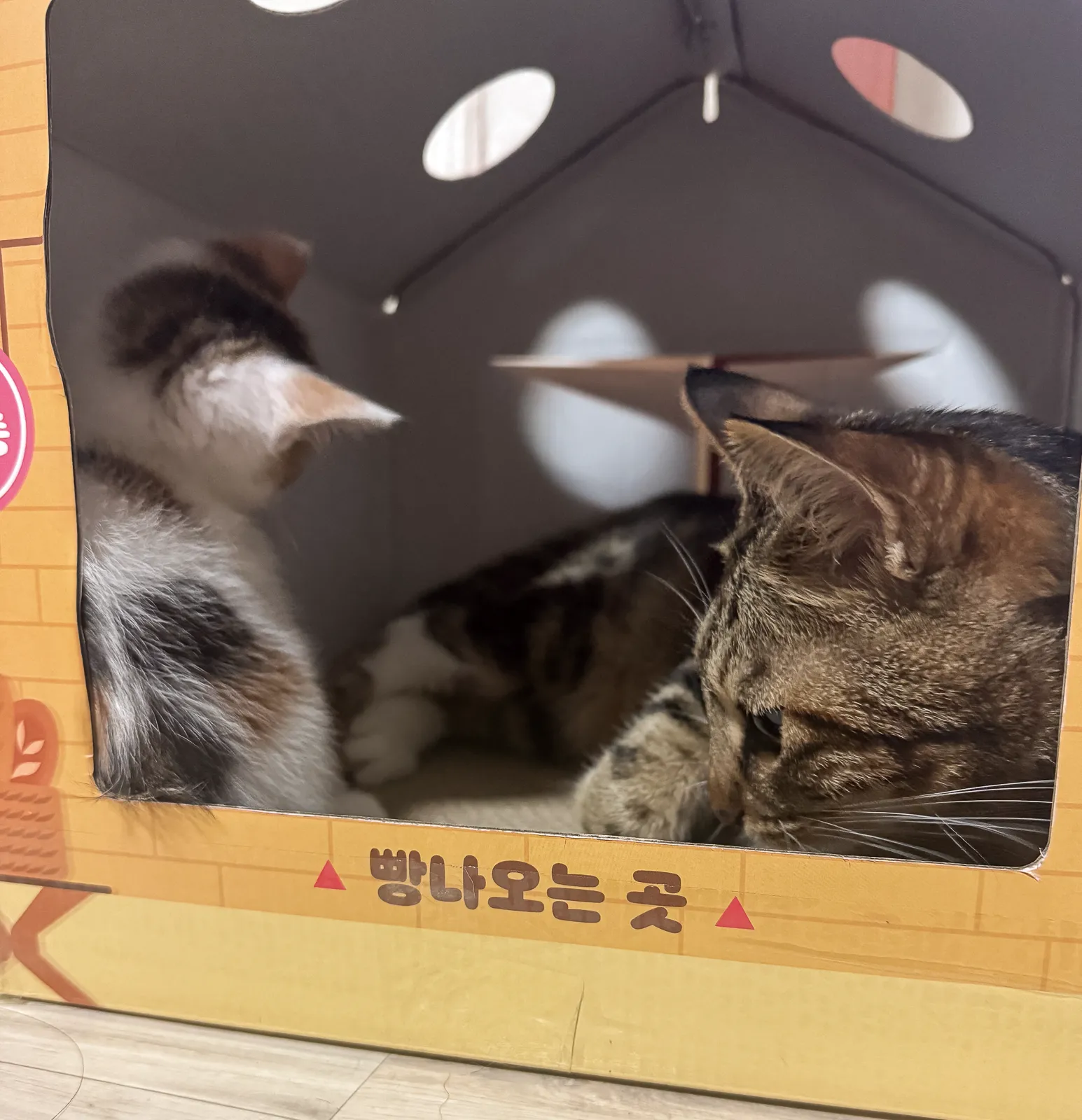
Our family felt an enormous sense of relief.
When Kant was barely eating and staying on the bookshelf, we had worried that Fooku’s arrival might remain a difficult change for him.
About ten days later, we were watching them sleep close together.
After that, behaviors suggesting a closer social relationship appeared more often.
They wrestled in play and chased each other through the house. They rested together in the scratcher house and on the cat tower, and they sometimes stayed very close together on the desk where I worked.
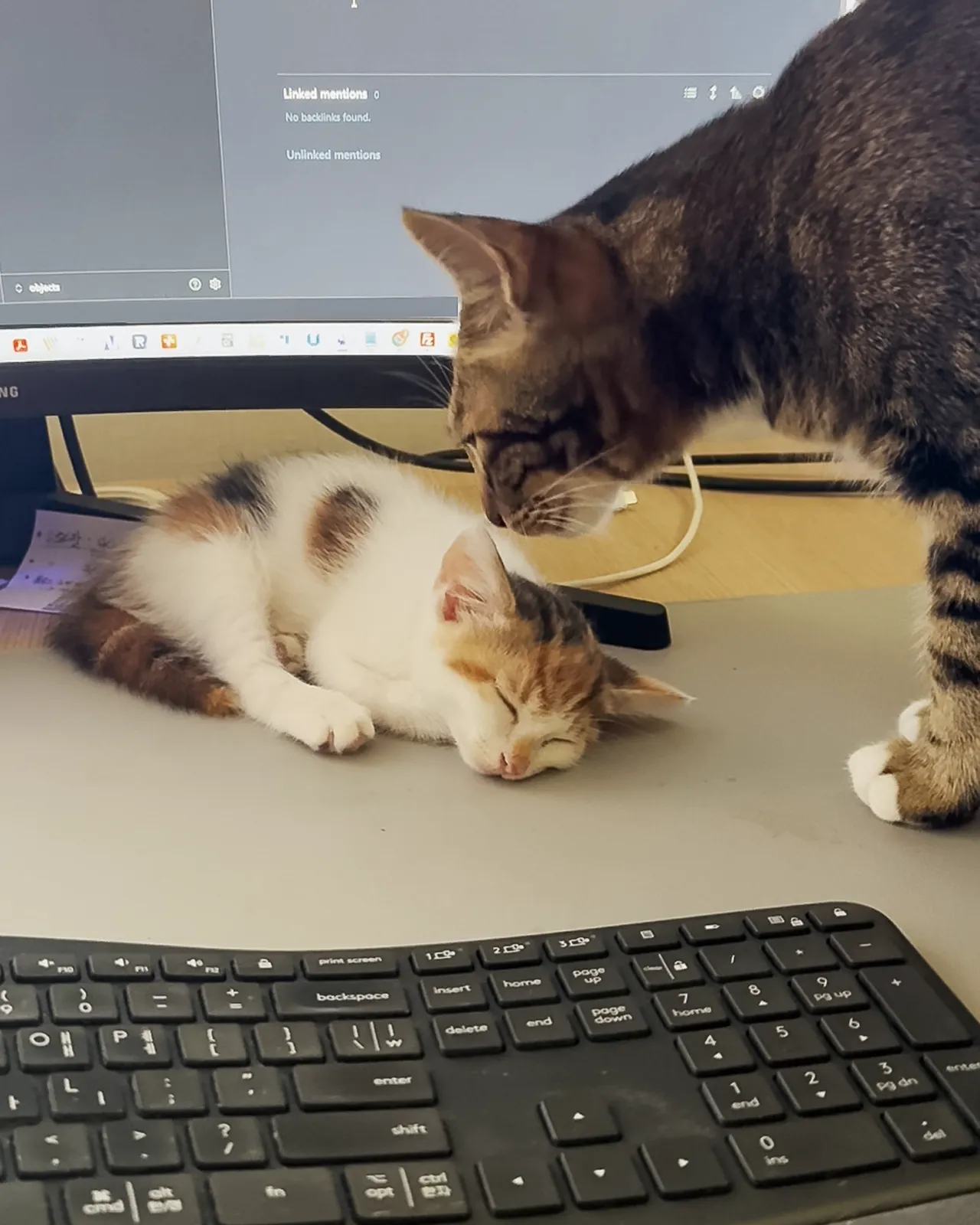
I also began seeing them groom each other. At first, Kant groomed Fooku more often; later, Fooku groomed Kant as well.
By late July, resting with their bodies touching had become a familiar sight.
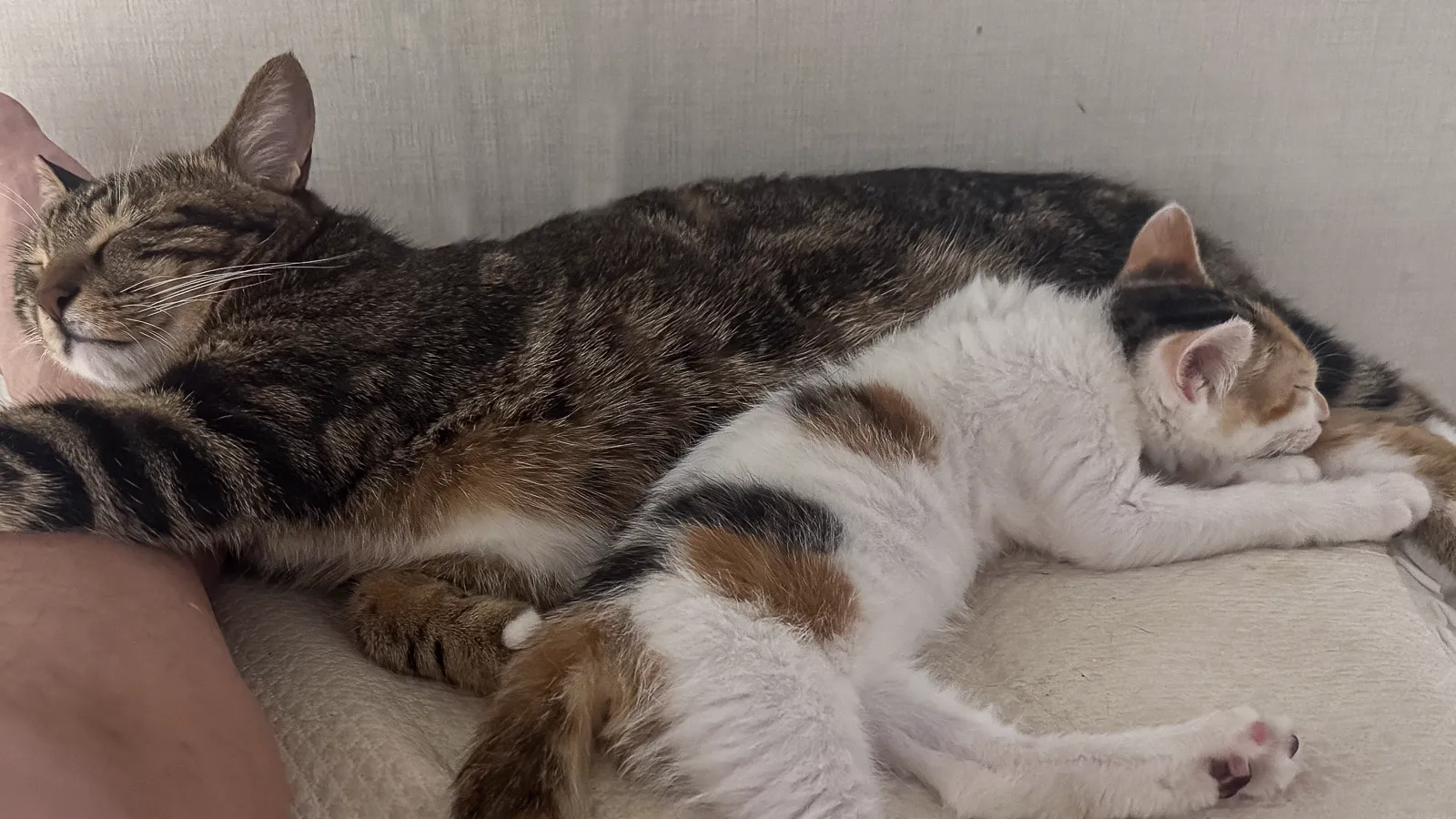
These behaviors are different from simply living in the same house without fighting. Resting close together, reciprocal play, and grooming each other are social behaviors associated with affiliative relationships between cats. The 2024 AAFP material likewise considers behaviors such as resting close and mutual play useful when evaluating positive intercat relationships.
So I came to think of Kant and Fooku as friends.
But there is one point I want to make clear.
Ten days is not the amount of time a cat introduction should take.
Ten days is simply what happened with Kant and Fooku. It is not a timetable that can be applied to other cats.
How quickly cats adjust to a new arrival can vary widely between individuals.
If I Did It Again, I Would Go More Slowly
The outcome with Kant and Fooku was good, but I do not therefore think the method we used was a good model.
There were things we did well.
We gave Fooku her own room and prepared hiding space, a litter box, water, and bedding. At first, we also used the cage as a physical barrier.
But we did not know a structured, stepwise introduction process.
Fooku and Kant saw each other as soon as she arrived. We did not have a separate scent-exchange stage. Only after Kant reacted so strongly did we begin seriously researching cat introductions.
If I knew then what I know now, I would start more slowly.
I would first give Fooku time to settle in her own space, then let the cats become familiar with each other’s scent before face-to-face contact. If either cat showed significant discomfort at one stage, I would slow down and increase the distance again rather than pushing forward.
The current AAFP guide likewise recommends a separate transition room and a gradual process guided by the cats’ responses.
I cannot claim that this would have prevented Kant from struggling as much as he did.
Kant also reacted sensitively to change when other cats later joined the household. That may reflect something about Kant as an individual.
What I can say with confidence is this:
If I were doing it again, I would not rush forward because I expected a good outcome. I would set the pace according to the behavior the cats actually showed me.
How Kant and Fooku Changed the Way I Think About Cat Introductions
After Kant and Fooku, more cats eventually joined the household.
But not every relationship developed the way theirs did.
Kant still plays with Fooku, but he does not have the same kind of relationship with Nori or Witty. Fooku is relatively social with the other cats, while Kant chooses to spend more time alone.
At first, I hoped that given enough time, Kant would eventually become as close to the others as he was to Fooku.
I still would not mind if that happened.
But I no longer think it has to.
Their relationships are not mine to decide.
What Kant and Fooku taught me was not that all cats become friends if you give them enough time.
If anything, the lesson was closer to the opposite.
Do not decide the future of a relationship too quickly from the first reaction.
And do not assume that the future has to be a close friendship.
You cannot make cats become friends.
The goal of an introduction does not have to be intimacy. A more realistic goal can be helping cats live in the same environment without chronic tension and giving them enough control to approach or move away when they need to.
That is now what I look at more closely when I judge whether cats are living together successfully.
Can each cat reach food, water, litter boxes, and resting places without repeatedly giving them up because of another cat? Can they come closer when they want to and move away when they need to? Can they maintain their ordinary routines even if they are not friends?
Kant and Fooku became closer than that.
I was very happy to see it.
But I no longer think their relationship is the goal every pair of cats should reach.
In a multi-cat household, I think what matters most is not making every cat friendly with every other cat, but creating an environment in which each one has access to the resources and space they need and can choose the distance that feels right.
I wrote more about that broader framework in A Guide to Multi-Cat Households: Creating a Home Where Cats Can Live Together Comfortably.
A Guide to Multi-Cat Households: Creating a Home Where Cats Can Live Together Comfortably