
About Philosopaws
From keeping animals to living alongside them.
Philosopaws goes beyond asking how to care for animals well. It is a record of how different living beings can share a life.
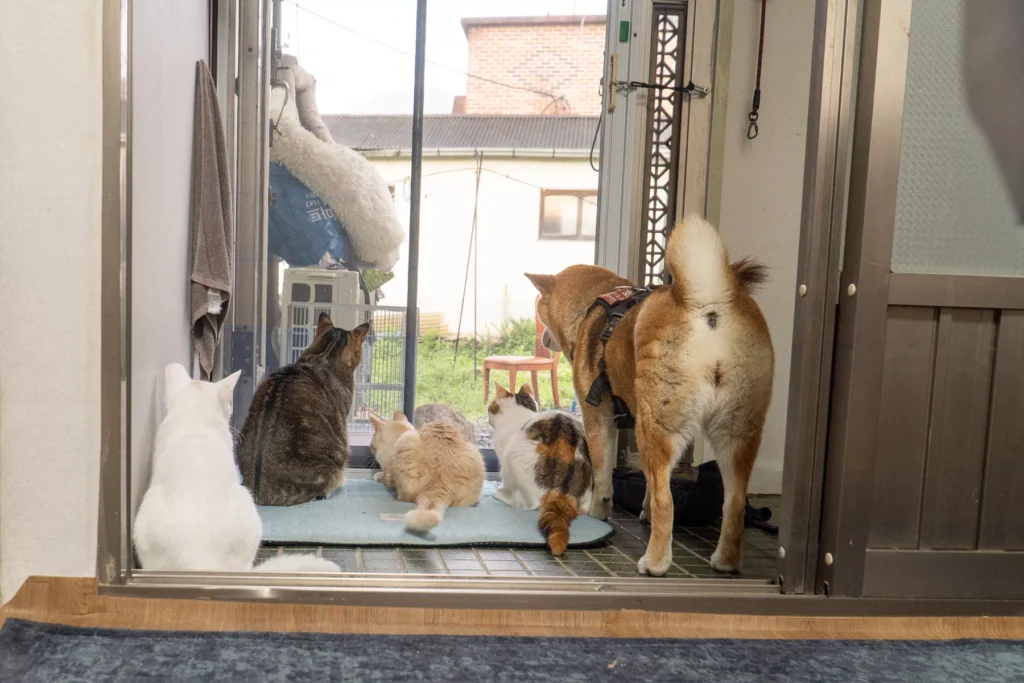
Hodu never goes to the bathroom inside the house.
So three times a day, roughly every eight hours, I have to take her outside. This doesn’t change during the heavy rains of summer or in the winter cold, when temperatures fall below -10°C.
In the past, those outings felt less like walks than a task that had to be done. I wandered around the neighborhood with Hodu until she relieved herself, and once the purpose of the walk was fulfilled, we went home. I was taking care of her, but in reality, I was the one deciding both the purpose and the shape of our walks.
Things began to change after I moved to a small rural village in South Korea.
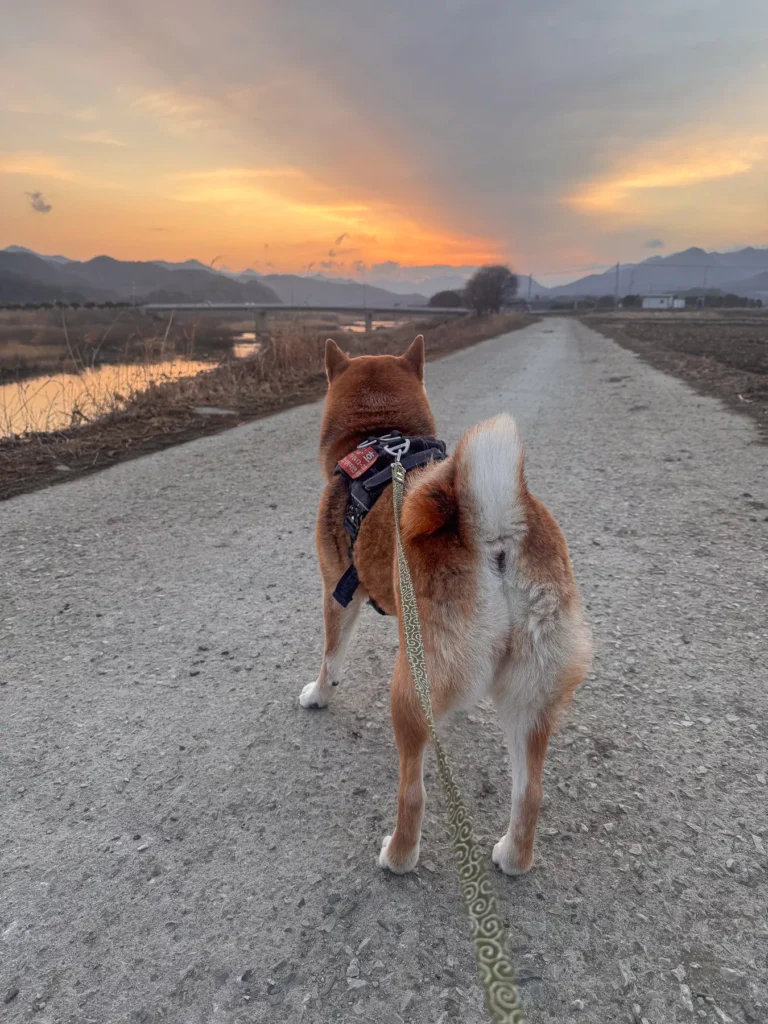
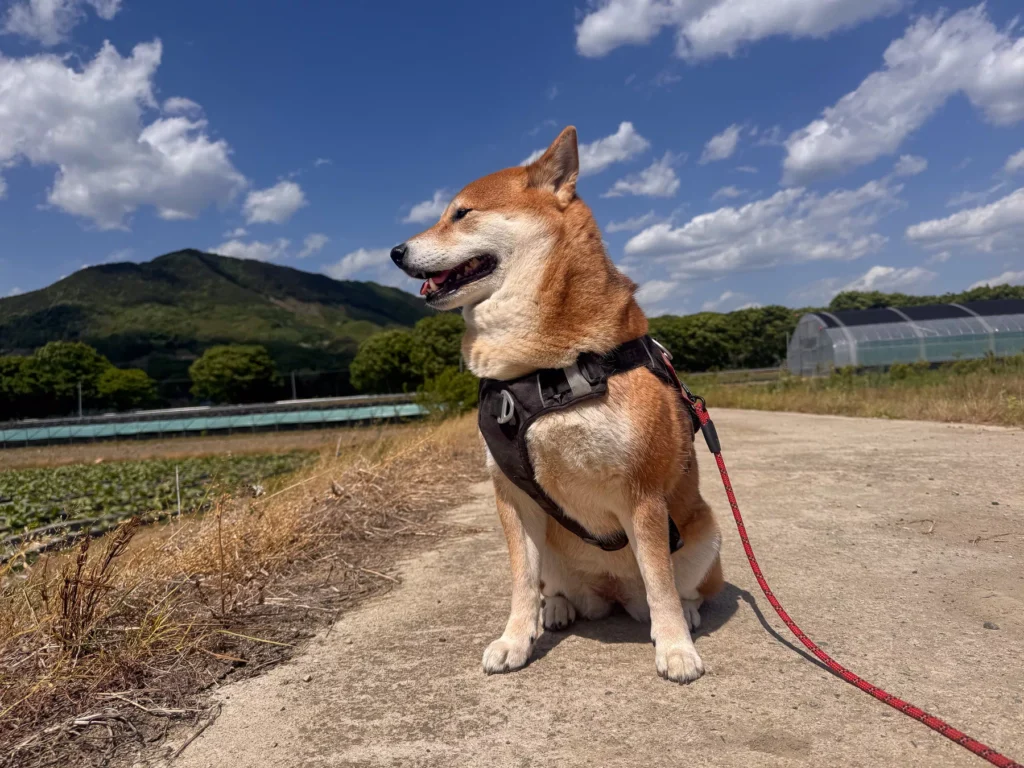
There are many beautiful paths around my home, the kind I never grow tired of walking along. At some point, I stopped deciding where we would go and began letting Hodu choose the direction.
Hodu chose the path. She lingered over certain smells. At intersections, she sometimes headed in a direction I had not intended to take. Unless there was a particular reason not to, I accepted her choice.
Our walks gradually stopped being only about relieving herself and became something else: exploration.
I cannot know how much happier Hodu became because of this change. I cannot precisely measure an animal’s happiness.
But I believe that being able to show me where she wants to go—and having that choice accepted—has made her life a little fuller than before.
And I changed too.
I was no longer walking the route I would have chosen, yet the walks became more enjoyable. I followed Hodu down paths I had never taken before. When she stopped, I stopped too and looked around.
As Hodu’s walks became an exploration, mine became one as well.
What Does It Mean to Care Well?
Doing a great deal for an animal does not necessarily mean that we are caring for them well.
Is it enough to feed them good food every day, take them to the vet, and provide a clean place to sleep?
Dogs have needs that come with being dogs, and cats have needs that come with being cats. Even among cats, what an individual likes or dislikes varies with personality and experience.
If we ignore those differences and simply provide the kind of good life that humans have decided is best, then even care that takes enormous amounts of time, effort, and money can still remain centered entirely on the human.
The kind of respect for animals I am talking about does not begin with some grand philosophical proposition.
It begins by acknowledging that they are living beings different from us.
It means trying to understand their instincts and needs, paying close attention to the personality and preferences of each individual, and accepting their choices whenever possible.
I think of this as allowing them to live as themselves.
It is one of the deepest forms of respect I know how to offer the animals I love.
Respect Does Not Mean Letting Them Have Everything They Want
Whenever possible, I let Hodu choose the route of our walks.
But I do not allow her to have everything she wants.
I do not give the animals in my home human food. No matter how much they want it, I restrict things that I believe could be harmful to their health.
If one of them seems ill, I take them to the vet. Even when they sense where we are going, tremble with fear, and resist treatment with all their strength, that is one time when I override what they want.
Kant and Fooku want to go outside the front door, but I do not let them.
When Hodu wants to rush toward kittens playing outside, I stop her.
In those moments, I am no longer simply respecting their freedom. I am controlling their behavior.
So where does protection end and control begin?
I still do not have a clear answer.
Perhaps this contradiction is built into the very idea of living with companion animals.
We decide where they live, what they eat, whether they can go outside, and even whether they will go to the hospital. No matter how much we love them, the fact remains that humans hold far more power to make decisions in these relationships.
That is why I think people who live with companion animals carry far more responsibility than we may realize.
Where I can, I respect their choices. When health or safety requires me to decide on their behalf, I intervene.
And even then, I have to keep asking whether I am controlling them too much in the name of doing what is best for them.
The Neighborhood Cats Made the Question Harder
The question became more complicated when I began feeding the cats who live around my home.
I sometimes wonder whether providing food three times a day and allowing them to use the front yard as a safe place is really helping them.
Am I interfering too deeply with the way they would otherwise survive?
How far should I intervene when a kitten is not growing properly and needs extra nutrition, or when I find a cat with a severe eye infection or an infected wound?
And what does it mean that I am considering TNR—trap, neuter, and return—as the number of cats increases and I worry about possible conflict with people in the village?
Sometimes the question goes deeper.
Is my concern for these animals really about them?
Or is my compassion partly a way of easing my own discomfort when I see an animal suffering?
I still do not know.
And perhaps there is no single answer to that question.
What I Mean by Coexistence
The coexistence I am talking about is not some beautiful state in which humans and animals live in perfect freedom and equality.
Real coexistence involves conflict.
Animals have their instincts and needs, and humans have lives of their own to live. Health can conflict with freedom. Safety can conflict with instinct. Sometimes caring for one animal can even conflict with the lives of the people around us.
We have to make choices within those conflicts.
The kind of coexistence I believe in today does not require either side to give up everything.
It means continuing to look for a place where an animal’s nature and individual personality can be respected as much as possible, while the human side of the relationship can also remain sustainable.
And it means never taking for granted the greater power humans have to make decisions.
That is what I want to call coexistence.
What Living With Animals Has Taught Me
At first, I thought I was the one taking care of the animals.
Of course, in many ways I still am. I feed them every day, walk them, clean up after them, take them to the vet, and carry the costs and responsibilities that come with all of it.
But over the years, I began to realize that the change had gone both ways.
When they seemed happy, I was happy too.
And as I learned to accept that they experience the world in ways completely different from my own, I changed a little as well.
I learned that something is not necessarily wrong simply because I do not understand it.
And something does not necessarily need to be corrected simply because it is different from the way I would prefer it to be.
That experience has gradually affected the way I look at people too.
I am less quick than I used to be to judge another person’s character or way of thinking. Even when I feel negatively toward someone, I try to remind myself that there may be reasons for the way they are—parts of their life that I simply do not know.
Living with animals has made me a somewhat more peaceful person.
The Question I Want Philosopaws to Keep Asking
Philosopaws will record many stories about living with animals.
There will be stories about food and health, behavior and care, walks and play, encounters with neighborhood cats, and sometimes very practical matters involving products and everyday life.
But beneath all of those stories, I want one question to remain.
How can we live alongside lives different from our own?
I do not know the answer yet.
Perhaps I never fully will.
But I can keep watching which path Hodu chooses today. I can keep observing what the cats seem to want. And I can keep asking whether what I am doing for them is truly for them.
I want Philosopaws to be less a place that declares the right answers than a record of returning to that question again and again in real life.
From keeping animals,
to living alongside them.